AI Calling for Auto Dealerships: Test-Drive Bookings and Service Reminders
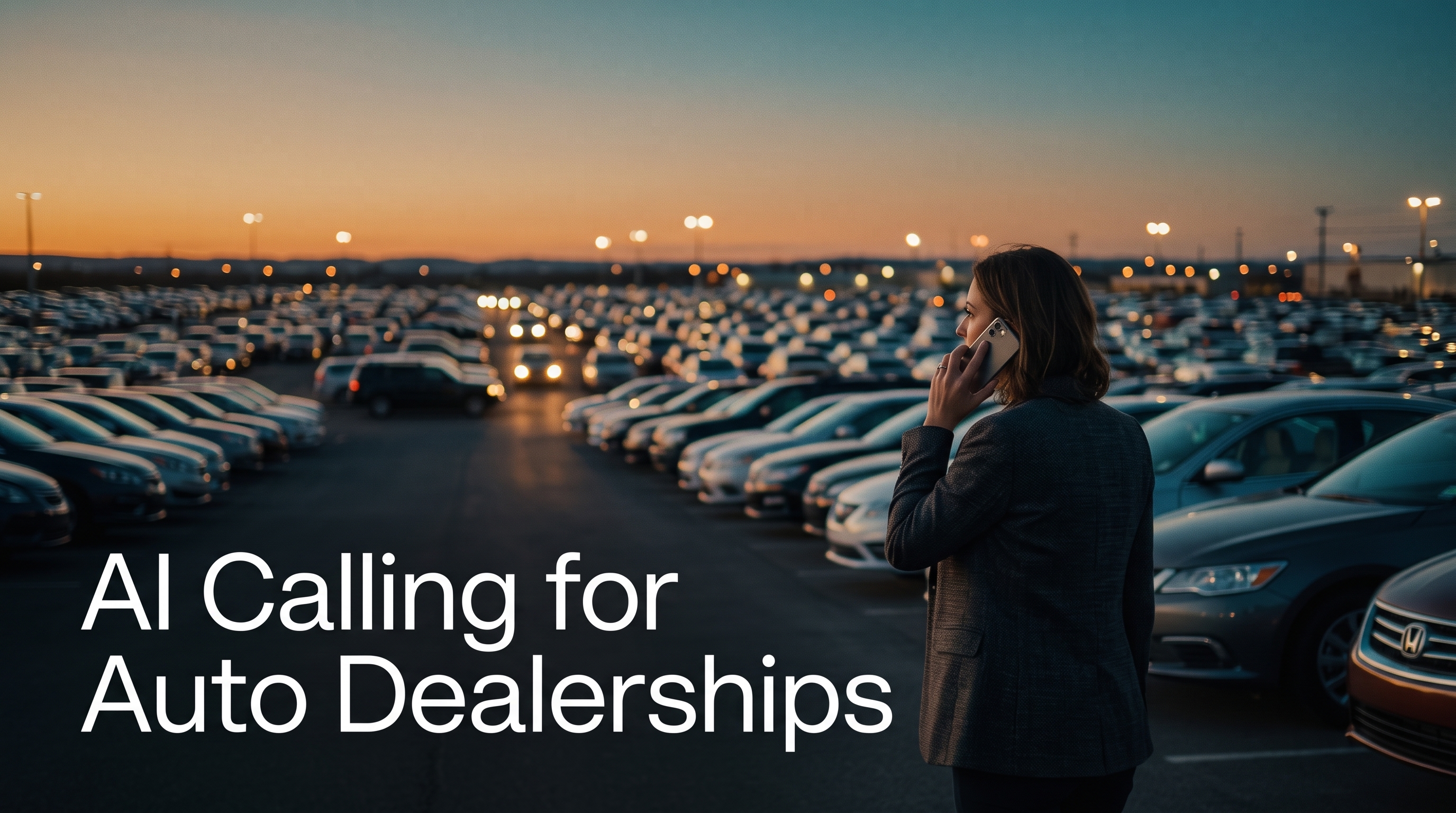
The automotive industry is in constant motion, and staying ahead means embracing innovation. For auto dealerships, this increasingly points towards the strategic adoption of AI calling. This technology is not merely a futuristic concept; it's a present-day disruptor that is fundamentally reshaping how dealerships market, sell, and service vehicles, especially when it comes to critical functions like test-drive bookings and service reminders.
In India, a massive and diverse automotive sector with millions of passenger vehicles sold annually and thousands of dealerships, the pressure on customer service is immense. Customers expect instant answers on everything from loan EMIs to service appointments, yet many dealerships still grapple with manual phone queues and understaffed teams. AI calling offers a powerful solution to bridge this gap, providing 24/7 availability and consistent quality in customer interactions.
What is AI Calling and How Does it Work for Dealerships?
AI calling, in the context of auto dealerships, refers to the use of conversational AI agents to handle phone interactions with customers. Unlike traditional interactive voice response (IVR) systems, these AI agents utilize Natural Language Understanding (NLU), Natural Language Processing (NLP), and machine learning (ML) to engage in human-like, two-way conversations.
When a customer calls a dealership, or when the dealership initiates an outbound call, the AI agent answers immediately. It identifies the caller's intent – whether they want to book a test drive, inquire about inventory, schedule a service, or ask a general question. The AI can then access relevant information, such as vehicle availability, pricing, or service schedules, and respond conversationally. If the caller wishes to book an appointment, the AI can directly schedule it into the dealership's Customer Relationship Management (CRM) or Dealer Management System (DMS) in real-time.
Every interaction, including full call transcripts and outcomes, is automatically logged into the CRM, providing sales and service teams with complete visibility and context for follow-ups. This automation frees up human staff to focus on more complex tasks and high-value interactions, rather than being bogged down by repetitive inquiries.
Why is AI Calling Critical for Auto Dealerships in Today's Market?
The automotive market is highly competitive, and customer expectations are constantly rising. Dealerships that respond faster and provide superior customer experiences are the ones that win.
- 24/7 Availability: Car buyers often research and make inquiries outside of traditional business hours. An AI calling system ensures that every call is answered instantly, 24/7, capturing leads that would otherwise be lost to voicemail or unanswered lines. This is particularly crucial for test-drive bookings, as interested buyers are ready to act when they call.
- Instant Lead Response: Research indicates that leads contacted within 5 minutes of expressing interest are 10 times more likely to convert than those contacted an hour later. AI outbound systems can call a new lead within minutes of a form submission, qualifying their interest and booking a test drive automatically.
- Reduced Missed Opportunities: Dealerships, on average, miss 15-30% of phone calls, leading to significant lost revenue. AI calling virtually eliminates missed calls, ensuring every customer interaction is captured and addressed.
- Improved Operational Efficiency: By automating high-volume, repetitive tasks like appointment scheduling, service reminders, and FAQ responses, AI frees up human staff to focus on more complex sales negotiations and in-person customer service. This can lead to substantial cost savings and increased productivity.
- Enhanced Customer Experience: AI agents provide consistent, accurate, and personalized responses, leading to higher customer satisfaction. They can handle multiple calls simultaneously, eliminating hold times and frustrating phone menus.
- Data-Driven Insights: Every AI-powered call is logged with transcripts and outcomes, providing valuable data for analysis. This allows dealerships to understand customer intent, identify missed opportunities, and refine their sales and service strategies.
AI Calling for Test-Drive Bookings: A Deep Dive
One of the most impactful applications of AI calling for auto dealerships is in automating test-drive bookings. This process is often a critical bottleneck in the sales funnel, with slow response times leading to lost opportunities.
How AI Streamlines Test-Drive Scheduling
When a prospective buyer expresses interest in a vehicle, typically through a website form, online ad, or direct call, an AI agent can immediately engage.
- Instant Outbound Call: The AI initiates an outbound call to the lead within seconds, often within 30 seconds to a minute, preventing interest from cooling.
- Lead Qualification: The AI engages the customer in a natural conversation, confirming their interest in a specific model, preferred time to visit, and any special requests (e.g., trade-in evaluation, specific test-drive route). It can also ask smart discovery questions about vehicle preference, budget, financing needs, and purchase timeline to identify high-intent buyers.
- Real-time Calendar Integration: The AI checks the dealership's live calendar system for available test-drive slots, integrating with existing CRM or DMS platforms.
- Automated Booking and Confirmation: Once a suitable time is identified and confirmed with the customer, the AI books the test drive directly into the calendar and sends an automated confirmation via SMS or WhatsApp, including showroom address, vehicle details, and a reminder. This significantly reduces no-shows.
- Seamless Handoff: If the customer has complex questions or is ready to discuss financing, the AI can seamlessly transfer the call to a human sales representative, providing the representative with the full context of the conversation.
This automated process ensures that every lead is acted upon swiftly, significantly increasing the chances of converting inquiries into showroom visits.
AI Calling for Service Reminders: Boosting Retention and Revenue
Beyond sales, AI calling plays a vital role in the after-sales experience, particularly with service reminders. Proactive service outreach is crucial for customer retention and maximizing service bay utilization.
How AI Automates Service Reminders and Bookings
AI agents can leverage data from the dealership's DMS to proactively contact customers when their vehicle is due for service.
- Proactive Outbound Campaigns: The AI initiates automated outbound calls to customers one to two weeks before their service is due.
- Service Information Delivery: The AI informs the customer about the required service, estimated cost, and checks for any open recalls.
- Appointment Scheduling: The AI can book a service appointment directly over the phone, checking real-time availability in the service calendar.
- Confirmation and Reminders: Automated confirmations and follow-up reminders are sent via SMS or WhatsApp, reducing no-show rates.
- Handling Rescheduling: If a customer needs to reschedule, the AI can handle this smoothly, updating the calendar accordingly.
This standardized and scalable approach ensures consistent outreach, keeps service bays full, and improves customer satisfaction by making maintenance convenient.
Compliance and Numbering for AI Calling in India (+91)
For businesses operating in India, particularly when engaging in outbound AI calling, adherence to the Telecom Regulatory Authority of India (TRAI) regulations is paramount. These regulations are designed to curb unsolicited commercial communication and protect consumers.
Key TRAI and DLT Compliance Requirements
As of 2026, TRAI has implemented strict regulations for AI calling. Businesses must be aware of and comply with the following:
- DLT Registration: Businesses must be registered as a principal entity on a Distributed Ledger Technology (DLT) platform. Headers and templates for commercial communications also need to be registered.
- A2P and Artificial-Voice Declaration: The September 2026 Third Amendment to the TCCCPR defines Application-to-Person (A2P) calls, explicitly including autodialled and artificial-voice calls. Businesses must declare their A2P calling use and calling-line ranges to their telecom provider in advance. Undeclared AI calls are treated as unsolicited commercial communication.
- Correct Number Series: Promotional calls must use the 140 series, while service and transactional calls should use the 1600 or 1601 series.
- Consent and DND Compliance:
- Digital Consent Registry: Every AI call must be verified against the Digital Consent Registry before dialing, creating an audit trail and preventing unauthorized calls.
- DND Scrubbing: Your AI calling platform must automatically scrub phone numbers against updated Do Not Disturb (DND) lists before every campaign, in real-time.
- Consent Records: Verifiable records of every inquiry and consent (source, date, purpose) must be maintained for promotional contacts.
- Promotional Call Timings: Promotional calls are blocked outside 9 AM to 9 PM IST.
- AI Identification: The AI must identify itself and your business at the start of the call.
- Easy Opt-Out: An easy opt-out mechanism must be provided during the call, and this preference must be honored across all channels (calls, SMS, WhatsApp).
- Operator-Side AI/ML Spam Detection: Telecom operators are mandated to run AI/ML systems to flag numbers likely to be sending spam.
Non-compliance can lead to significant penalties, including immediate disconnection and blacklisting from telecom networks.
For a comprehensive understanding of AI outbound calling compliance in India, refer to Tabbly's detailed guide: TRAI DLT Compliance for AI Outbound Calling in India: A Complete 2026 Guide.
How Tabbly Enables AI Calling for Auto Dealerships
Tabbly provides a robust AI calling platform designed to meet the specific needs of auto dealerships, enabling seamless test-drive bookings and service reminders while ensuring compliance with regulations like TRAI's DLT framework in India. Our platform empowers dealerships to:
- Deploy Conversational AI Agents: Create and deploy AI voice agents that can engage in natural, human-like conversations with customers in multiple languages, including regional Indian languages.
- Automate Test-Drive Scheduling: Leverage AI to instantly call new leads, qualify their interest, check calendar availability in real-time, and book test drives directly into your CRM or DMS.
- Streamline Service Reminders: Automate outbound calls for service reminders, recall notifications, and lease-end outreach, ensuring consistent customer engagement and maximizing service bay utilization.
- Ensure Compliance: Tabbly's platform is built with compliance in mind, offering features for DLT registration, consent management, DND scrubbing, and adherence to call timing regulations, especially crucial for operations in India.
- Integrate with Existing Systems: Seamlessly integrate with your existing CRM and DMS platforms (e.g., Salesforce, HubSpot, Zoho, LeadSquared, Kylas, VinSolutions, DealerSocket, Tekion), ensuring all call outcomes, transcripts, and customer data are automatically logged and accessible.
- Provide Real-time Analytics: Gain insights into call volumes, success rates, average duration, and conversion metrics through comprehensive dashboards, allowing for continuous optimization of AI calling campaigns.
- Scale Operations 24/7: Handle hundreds of simultaneous calls around the clock, ensuring no customer inquiry goes unanswered, even during peak hours, weekends, or holidays.
By automating repetitive yet critical communication tasks, Tabbly helps dealerships reduce operational costs, improve staff efficiency, and deliver an exceptional customer experience that drives sales and loyalty.
Setting Up AI Calling for Your Dealership: A Step-by-Step Guide
Implementing an AI calling solution like Tabbly involves a structured approach to ensure maximum effectiveness and smooth integration with your existing operations. Here's a general outline of the setup process:
- Discovery and Needs Assessment:
- Identify the specific pain points you want to address (e.g., missed calls, slow lead response, inconsistent service reminders).
- Determine the key workflows to automate (e.g., test-drive booking, service scheduling, lead qualification, post-service feedback).
- Define your target customer segments and preferred communication channels.
- Platform Configuration and Knowledge Base Setup:
- Configure your Tabbly AI agent with your dealership's specific information, including inventory details (models, pricing, availability), service offerings, hours of operation, and financing plans.
- Build a comprehensive knowledge base that the AI can draw upon to answer customer questions accurately and consistently.
- Train the AI on common customer inquiries and desired responses.
- Call Flow Design and Scripting:
- Design the conversational flow for each use case (e.g., test-drive booking, service reminder).
- Develop natural-sounding scripts that guide the conversation while allowing for flexibility and human-like interaction.
- Incorporate intent detection to ensure the AI understands the caller's purpose and can respond appropriately.
- Integration with CRM/DMS and Calendars:
- Integrate Tabbly with your existing CRM (e.g., Salesforce, HubSpot, Zoho) and DMS (e.g., VinSolutions, DealerSocket, Tekion) to ensure seamless data flow.
- Connect with your appointment scheduling calendars to enable real-time booking and availability checks for test drives and service appointments.
- Set up automatic logging of call transcripts, outcomes, and customer information into your CRM.
- Compliance Configuration (for India):
- Ensure your DLT registration is complete and headers/templates are approved.
- Declare your A2P/artificial-voice use to your telecom provider.
- Configure real-time DND scrubbing and consent verification within the platform.
- Set up call timing restrictions for promotional calls.
- Testing and Optimization:
- Conduct thorough testing of the AI agent's performance across various scenarios and customer queries.
- Monitor key metrics such as call resolution rates, transfer rates, and customer satisfaction.
- Continuously refine the AI's scripts and knowledge base based on feedback and performance data to improve accuracy and effectiveness.
- Staff Training and Handoff Protocols:
- Train your sales and service teams on how to interact with the AI system, understand call summaries, and handle transferred calls with full context.
- Establish clear protocols for when and how the AI should hand off a call to a human agent.
The implementation process for an AI voice agent can be remarkably fast, with some platforms enabling agents to handle real calls within 48 hours.
Comparing AI Calling to Traditional Methods
To fully appreciate the value of AI calling, it's helpful to compare it against the traditional methods dealerships have relied upon.
| Feature | Traditional Methods (Human Agents/IVR) | AI Calling (Tabbly) |
|---|---|---|
| Availability | Limited to business hours; after-hours calls often go to voicemail or are missed. | 24/7/365 coverage, never misses a call. |
| Response Time | Can be slow, especially during peak hours or for online leads. Calls often go unanswered or on hold. | Instant response (within seconds) for all inquiries. |
| Call Handling Capacity | Limited by the number of human agents; can only handle one call at a time per agent. | Handles hundreds of simultaneous calls, scaling instantly with demand. |
| Consistency & Accuracy | Varies by agent, prone to human error, fatigue, or inconsistent messaging. | Consistent, accurate information delivery every time, adhering to predefined scripts and knowledge base. |
| Cost | High operational costs (salaries, benefits, training, turnover). A human BDC agent costs $35,000–$45,000/year. | Significantly lower cost per interaction. An AI BDC can start at $34/month. |
| Lead Qualification | Manual and time-consuming; sales teams may spend hours on unqualified leads. | Automated, intelligent lead qualification, identifying high-intent buyers instantly. |
| Data Logging & Analytics | Often manual, incomplete, or delayed; fragmented data across systems. | Automatic, real-time logging of call transcripts, outcomes, and sentiment to CRM/DMS. |
| Customer Experience | Can be frustrating with hold times, transfers, or inconsistent information. | Seamless, personalized, and efficient interactions, leading to higher satisfaction. |
| Scalability | Difficult and expensive to scale quickly to meet fluctuating demand. | Highly scalable to handle any call volume without additional headcount. |
Potential Pitfalls and How to Avoid Them
While AI calling offers immense benefits, it's crucial to be aware of potential pitfalls and implement strategies to mitigate them:
- Lack of Human Touch: While AI is powerful, complex or emotionally charged interactions still benefit from human empathy.
- Solution: Design clear handoff protocols. The AI should be able to intelligently identify when a human intervention is needed and seamlessly transfer the call with full context to the appropriate department or agent.
- Poor Integration with Existing Systems: Fragmented systems can limit the AI's effectiveness and create data silos.
- Solution: Prioritize platforms like Tabbly that offer deep and seamless integration with your existing CRM, DMS, and calendar systems. This ensures the AI has access to the necessary data and can update records automatically.
- Inaccurate or Outdated Information: If the AI's knowledge base is not regularly updated, it can provide incorrect information.
- Solution: Establish a process for regularly updating the AI's knowledge base with the latest inventory, pricing, service offerings, and promotions.
- Non-Compliance with Regulations: Especially in regions like India, failing to comply with telecom regulations can lead to severe penalties.
- Solution: Choose an AI calling platform that is built with compliance in mind and provides the necessary tools and features for DLT registration, consent management, and DND scrubbing. Stay informed about the latest regulatory changes.
- Generic or Robotic Conversations: A poorly designed AI can sound unnatural or fail to understand nuanced customer requests, leading to frustration.
- Solution: Invest in AI agents that utilize advanced NLP and NLU for human-like conversations. Continuously monitor call transcripts and customer feedback to refine the AI's conversational abilities and ensure it sounds natural.
- Over-Reliance on Automation: Believing AI will solve all problems without human oversight is a mistake.
- Solution: View AI as an enhancement to your team, not a replacement. Human creativity and oversight remain essential for higher-level thinking, relationship building, and handling unique customer situations.
Use Cases Beyond Test-Drive Bookings and Service Reminders
The applications of AI calling for auto dealerships extend far beyond test-drive bookings and service reminders. Here are additional use cases:
- Lead Qualification and Nurturing:
- Instantly qualify inbound leads by asking smart discovery questions about vehicle preferences, budget, and purchase timeline.
- Re-engage dormant leads in your CRM with personalized AI outreach via phone and SMS, converting cold leads into booked appointments.
- Follow up on unclosed quotes to answer pricing or trade-in hesitations.
- Inventory Inquiries:
- Provide instant answers to questions about vehicle availability, specifications, and pricing.
- Match inventory to buyer preferences and recommend suitable vehicles.
- Post-Sales Support:
- Conduct post-service satisfaction surveys to gather feedback and improve CSI scores.
- Proactively contact customers for insurance renewals, suggesting suitable policies and upsell opportunities.
- Handle recall outreach campaigns, informing affected customers and scheduling repairs.
- Finance and Insurance (F&I) Support:
- Answer general financing questions and provide EMI estimates.
- Pre-qualify customers for financing by gathering basic information.
- Dealership FAQ and General Information:
- Answer common questions about dealership hours, location, and general policies.
- Route complex inquiries to the appropriate department with full context.
For more insights into the diverse applications of AI calling, explore Tabbly's article on Top Use Cases of AI Calling Software in India (2026).
The Future of AI in Automotive Retail
AI is not just a passing trend; it's the future of automotive retail. Dealerships that strategically embrace AI will be better equipped to adapt to evolving buyer expectations, improve profitability, and build lasting customer relationships.
The shift is from "AI assists humans" to "AI agents work autonomously," handling repetitive, low-leverage tasks and freeing up human staff for higher-level work. This "agentic AI" will continue to amplify efficiency, personalize experiences, and drive smarter decisions across sales, service, and operations.
For Indian auto retailers, the future lies in a hybrid model where AI-led customer engagement coexists with traditional physical dealerships, leveraging connected data systems and personalized financial propositions.
The global automotive AI market is projected to reach $14.92 billion by 2030, with a significant portion dedicated to dealership operations. Dealerships that invest in AI now are not just adopting technology; they are securing their long-term success in a rapidly transforming industry.
Get started with 1 hour of free credits at tabbly.io.
Frequently Asked Questions
How much does AI calling for auto dealerships cost?
The cost of AI calling for auto dealerships can vary based on the platform and features. Some AI BDC solutions for car dealerships start at around $34/month, handling hundreds of calls simultaneously. Other models include a one-time setup fee (e.g., $500) plus a per-minute charge (e.g., $0.18 per minute). Enterprise-level solutions might have monthly fees ranging from $699 to $2,999, often with a one-time setup fee. When evaluating costs, it's crucial to consider the cost per "shown appointment" rather than just "set appointment," as this provides a more accurate measure of ROI.
Can AI calling integrate with my existing CRM and DMS?
Yes, leading AI calling platforms like Tabbly are designed for seamless integration with major CRM (e.g., Salesforce, HubSpot, Zoho, LeadSquared, Kylas) and DMS (e.g., VinSolutions, DealerSocket, Tekion) systems. This ensures that all call outcomes, transcripts, and customer data are automatically logged, providing your sales and service teams with a unified view of customer interactions and eliminating manual data entry.
Is AI calling legal and compliant in India?
Yes, AI outbound calling is legal in India, provided it adheres to TRAI's commercial communication rules. This includes DLT registration, using the correct number series (140 for promotional, 1600/1601 for service), obtaining valid consent, respecting DND preferences, and, since the September 2026 Third Amendment, declaring Application-to-Person (A2P) or artificial-voice calls to your telecom provider in advance. Platforms like Tabbly help ensure compliance with these regulations.
What types of calls can AI agents handle for a car dealership?
AI voice agents can automate a wide range of calls for car dealerships, including:
- Test-drive bookings and scheduling
- Service appointment bookings and reminders
- Lead qualification and follow-up
- Inventory inquiries and availability checks
- General FAQs about dealership hours, location, and services
- Post-service feedback and satisfaction surveys
- Recall outreach and lease-end notifications
How quickly can an AI calling system be implemented?
The implementation time for an AI calling system can be surprisingly fast. Many platforms offer rapid deployment, with some claiming agents can be handling real calls within 48 hours of setup. This typically includes discovery, building a knowledge base with your dealership's specific information, prompt tailoring, and integration with your appointment calendar.
Will AI calling replace my dealership's human staff?
No, AI calling is not intended to replace human staff but rather to enhance their capabilities and efficiency. AI absorbs repetitive, low-leverage tasks like routine question handling, pre-qualification, and appointment setting, allowing human staff to focus on building relationships, navigating complex deals, and delivering exceptional in-person experiences. Dealerships that effectively integrate AI treat it as a teammate, optimizing workflows and improving overall productivity and customer satisfaction.